The content has been scaled based on the preliminary questions. You can edit the answers on the guide's start page.
Suomi.fi
Go directly to contents.What do I do?
Preparing for incidents and crises- Guide's start page
- How to prepare for incidents and crises
- Preparedness instructions in print and in sign languages
- Checklist for preparing for incidents and crises
Military conflicts and civil defence

How does Finland prepare for military threats?
Finland has always been also prepared for the worst possible threat, war.
Preparedness and the maintenance of defence aim to create a preventive restraint to avoid a military threat to Finland.
Hostile parties may threaten national security with a wide range of malicious activities, even without the use of military force. This kind of hybrid action does not mean that the situation will culminate in a military conflict. Intensified situations can also be resolved.
Updated: 19/1/2026
National defence belongs to everyone
For individuals, maintaining defence means, for instance, the will to defend the country, the will to take care of Finnish society and participate in its activities, for example through democratic decision-making.
Military defence is built on conscription and the support of the whole society to national defence. All Finnish citizens have a national defence obligation, and everyone plays an important role in defending Finland.
Read more about the national defence obligation on the Suomi.fi website
Updated: 2/9/2025
How do conscripts, persons liable for non-military service and civilians act in the event of a war?
In the event of a war, conscripts who have completed military service and persons liable for non-military service would carry out their duties in accordance with their training and competence.
Civilians would have more responsibility for maintaining the functioning of society, and they would be obliged to participate in tasks that meet their abilities.
Updated: 2/1/2026
Information on all services is not available in your chosen language. Change the language of the site to receive information on services in other languages.
Civil defence in the event of a war
Civil defence is an activity that protects civilians and safeguards the functioning of society in the event of a war.
If the population needs to be protected from the effects of the war, the authorities will inform and instruct people on this.
Updated: 2/9/2025
Civil defence shelters
Civil defence shelters are activated and used for sheltering if ordered by the rescue authorities. The civil defence shelter provides protection against dangers such as explosions, building collapses and dangerous substances.
Shelters are usually located in areas where people live, work or otherwise spend their time.
Updated: 21/1/2026
Evacuation
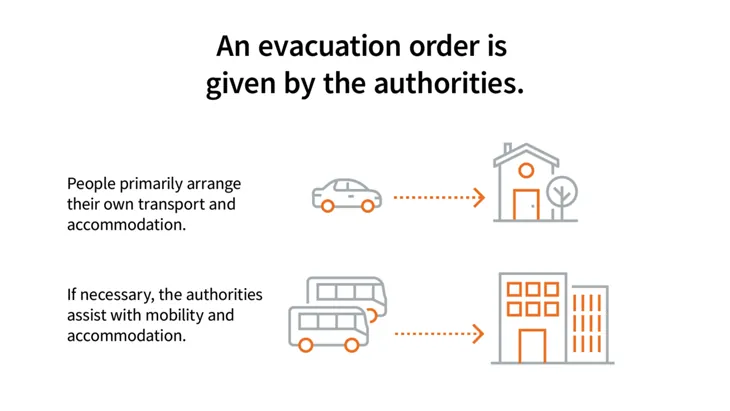
Evacuation means moving the population to a safe place from a dangerous area during a war or a related threat.
The aim is to continue living as normally as possible also during a war, and evacuation is not necessary if the people in an area can be protected by other means. The authorities will provide information and instructions if it is necessary to leave the area.
If you have to evacuate:
- Stay calm.
- Only take the necessary items with you. Take your pet with you.
- Follow the instructions of the authorities.
Read more:
Updated: 2/9/2025