The content has been scaled based on the preliminary questions. You can edit the answers on the guide's start page.
Suomi.fi
Go directly to contents.What do I do?
Preparing for incidents and crises- Guide's start page
- How to prepare for incidents and crises
- General instructions on preparedness, home emergency supplies and on what to do in different situations
- Basic knowledge and skills help you cope with many situations
- There are many ways to prepare
- Get home emergency supplies for at least three days
- Pay attention to various limitations of an individual functional capacity in preparedness
- How the authorities warn about emergencies
- How to seek shelter indoors
- Military conflicts and civil defence
- General instructions on preparedness, home emergency supplies and on what to do in different situations
- Preparedness instructions in print and in sign languages
- Checklist for preparing for incidents and crises
General instructions on preparedness, home emergency supplies and on what to do in different situations
Basic knowledge and skills help you cope with many situations
There are instructions for various situations that can help you improve your preparedness.
However, basic knowledge and skills help you cope with many situations. For example, home emergency supplies form an excellent basis for preparing for many situations.
You will cope with many situations when you:
- Stay calm.
- Think about what the situation involves and which instructions you know are related to it. How does the situation affect you, your loved ones and the people local to you?
- Follow official communications and emergency warnings.
- Follow the instructions.
- List the most important things to do in the situation and take action.
- Help others to the best of your ability.
Updated: 29/6/2026
There are many ways to prepare
We all have different starting points for preparedness. However, everyone should prepare for incidents and crises in some way.
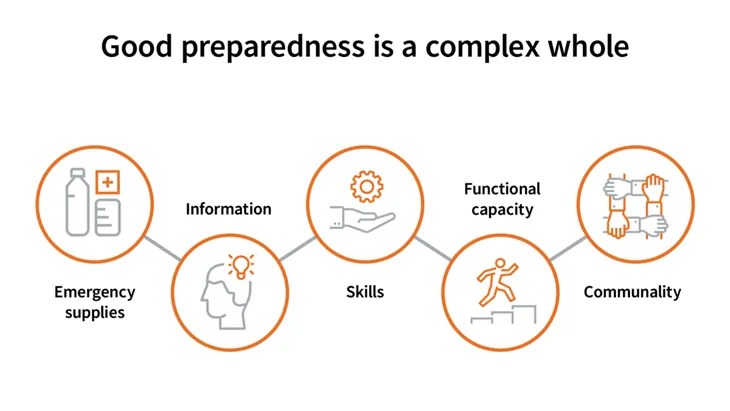
Preparedness includes
- home emergency supplies which means water, food and necessary supplies
- information about risks and threats, how to prevent them and how to prepare for them
- an ability to act, when faced with an abnormal situation
- functional capacity, including both physical and mental capacity
- a sense of community, which means trust and connection with other people and helping others.
Consider how you can best increase your ability to cope with unusual situations.
Updated: 29/6/2026

Get home emergency supplies for at least three days
Home emergency supplies form an excellent basis for preparing for many situations.
Home emergency supplies include water, food, medicines and other essential supplies. It is not a separate storage but should instead contain products you normally use.
The recommendation is to reserve enough supplies to last you and other members of your household for at least 3 days. However, even a small set of home emergency supplies will help you even if you cannot get everything at once.
It is important to get the supplies when daily life is going on as usual. This will reduce the need to get the supplies when there is an incident and the demand for the supplies may spike.
Home emergency supplies will also help you if you are unable to get to the shops for some ordinary reason, such as falling ill.
Updated: 29/6/2026
Information on the services is not available in your chosen language. Change the language of the site to receive information on services in other languages.
Pay attention to various limitations of an individual functional capacity in preparedness
Functional capacity refers to a person’s physical, psychological, cognitive and social capabilities for coping with everyday activities.
Functional capacity may decrease due to aspects such as ageing, injury or illness.
For everyone, preparedness includes consideration of your own and your loved ones’ situations and possibilities, even though the instructions for home emergency supplies and operating instructions for different situations apply to all.
Use the following questions to think about which arrangements you need for preparedness:
- How will the incidents specifically affect your everyday life?
- What restrictions should be taken into account?
- What can you do yourself and where do you need help from others in various situations?
- Who could help you the quickest if something happened?
- Should you improve your safety net?
Read more:
- Housing safety for special groups - Finnish National Rescue AssociationOpens in a new window.
- Preparing for serious incidents in the services for persons with disabilities (In Finnish and Swedish) - Finnish Institute for Health and WelfareOpens in a new window.
- Safety for people with memory disorders (In Finnish and Swedish) - The Alzheimer Society of FinlandOpens in a new window.
Updated: 29/6/2026
How the authorities warn about emergencies
An emergency warning is the most important way to warn people and give them instructions in the event of danger. An emergency warning is transmitted on the radio, the 112 Suomi application, websites and, if necessary, television.
A public warning signal is a sound used for warning people of an imminent danger outdoors. It is a rising and falling sound that lasts for one minute. If you hear the public warning signal, go indoors immediately.
Early warnings of severe weather phenomena issued by the Finnish Meteorological Institute increase safety by enabling proactive preparedness, which helps reduce damage and disruption in everyday life.
Read more: Emergency warnings, the public warning signal and early warnings - Suomi.fi Opens in a new window.
Updated: 29/6/2026
How to seek shelter indoors
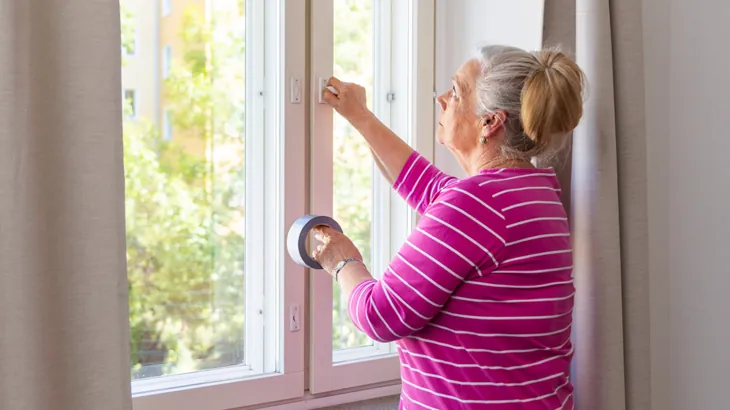
Seeking shelter indoors is the most common way of protecting yourself from a hazard coming from outside. This means that you will move indoors, for example, if toxic smoke, chemicals or radioactive substances are spread in the air.
The authorities warn the population of the threat with an emergency warning and the public warning signal.
Updated: 6/7/2026