To get the best help for your situation, first answer the questions on the guide's start page.
Suomi.fi
Go directly to contents.What do I do?
Preparing for incidents and crises- Guide's start page
- How to prepare for incidents and crises
- Preparedness is about cooperation
- Preparedness instructions in print and in sign languages
- Checklist for preparing for incidents and crises
How do different parties prepare?
Roles of different actors in comprehensive security
In Finland, all parties in society cooperate in the preparedness and operations related to incidents and crises. This is called the cooperation model for comprehensive security, which is described in the Security Strategy for Society.
The competence and activities of individuals form the basis for society’s ability to act when something extraordinary happens. The basis for comprehensive security is that people are prepared and able to work together in any circumstances. It requires trust in other people and in society’s organisations and decision-makers.
Authorities at the national, regional and local levels and other parties involved in ensuring security are responsible for preparing for different situations and maintaining the functioning of society also in extraordinary circumstances. Many other parties in society also play an important role in the capacity of society to face exceptional situations.
Read more:
Updated: 2/9/2025
The role of the authorities and the means of preparedness in society
The authorities and other parties involved in preparedness maintain society’s preparedness to respond to incidents, crises and emergency conditions in many ways.
The authorities manage preparedness, decision-making and operations, and they have statutory responsibilities and obligations.
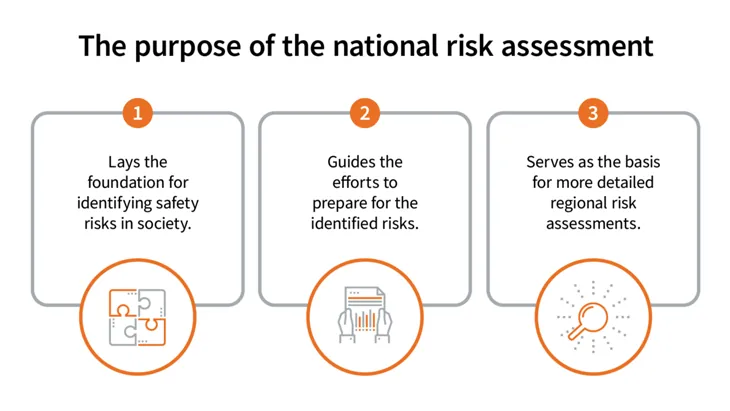
Key means of preparedness in society include security of supply and risk assessments.
Updated: 5/5/2026
Regional and local preparedness
Regional and local authorities are also responsible for maintaining essential services during incidents and emergency conditions.
Municipalities, wellbeing services counties, authorities and other regional actors prepare for and react to risks together. They have agreements and operating models for dealing with different situations.
Updated: 2/1/2026
The role of communities and organisations in preparedness
Non-governmental organisations (NGOs) support the authorities in preparedness and acting in extraordinary situations.
NGOs
- provide training on important citizenship skills and preparedness
- organise volunteering opportunities for people
- offer communal activities
- help and support people across a variety of life situations
- assist the authorities during accidents and crises.
The activities of organisations and communities promote wellbeing, health and inclusion.
Updated: 2/9/2025
The role of companies and employers in preparedness
Companies and employers play a key role in the functioning of society, as business life and other organisations maintain a significant share of the functions and services necessary for society.
Employers offer a lot of employee safety training, which everyone should take advantage of. Safety skills learned for work tasks at work can also be easily applied in other areas of life. Safe working methods and operating models in hazardous situations are particularly useful during incidents or crises.
Updated: 2/9/2025